
 Why Your Garage Door Lets the Cold In
Carlisle homes mostly date 1938-1998, median 1962, and the cold here chews through old seals fast.
Why Older Carlisle Doors Struggle With the Cold
Carlisle homes mostly date 1938-1998, median 1962, built before modern insulation codes. Here's what that means for your garage door in a cold-climate town.
Local detail
What Is Going On
Most of the doors we get called out on in Carlisle sit on houses built between 1938 and 1998, with the median landing around 1962. That matters because a door installed on a house from that era was never built to any insulation standard - there wasn't one to follow. The door is a slab of steel or wood, often single-layer, hung on hardware sized for a lighter panel than what's common today.
Across the 33 named areas we work in, the pattern repeats: 1960s and 70s construction dominates. That means original jambs that have shifted slightly over sixty years, tracks mounted to framing that's settled, and openers (where they exist at all) that were bolted on later as an afterthought rather than designed in. None of that is a flaw in the house. It's just what happens to a structure that's been standing since before anyone insulated a garage door as a matter of course.
When a door from that period fails, it's rarely one clean problem. The spring is undersized for a panel someone replaced with a heavier insulated one at some point, or the track was never re-shimmed after the jamb moved. You're not fixing a modern door. You're fixing six decades of small adjustments layered on top of a door that was never meant to be airtight.
The area
What the Weather Here Does to It
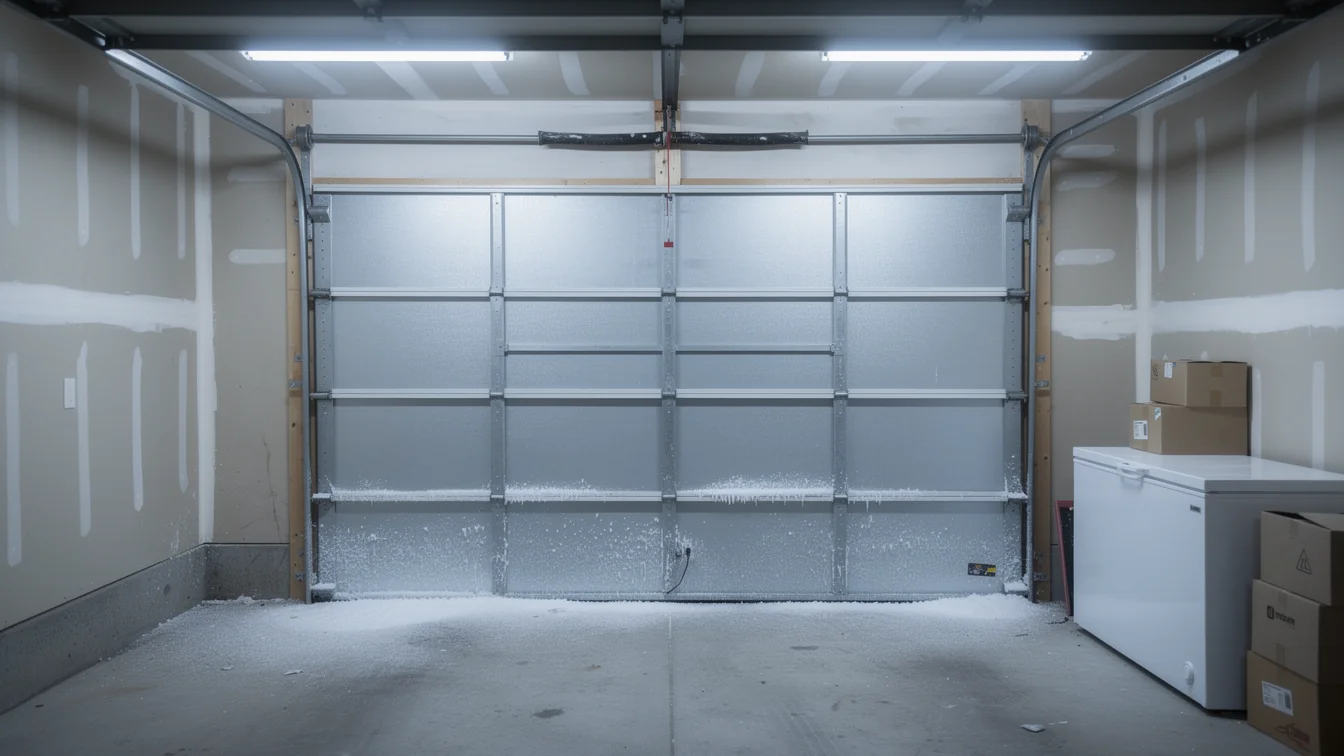
Carlisle sits in a cold, severe climate band, and that's the detail that turns an old door from an annoyance into a real problem. A single-layer steel door built before insulation codes existed doesn't just let cold air in - it moves. Metal contracts hard in winter, and on a door with no foam core backing it, that contraction shows up as a panel that binds in the track on the coldest mornings and runs free again by afternoon.
That daily cycle is harder on old hardware than steady cold would be. Rollers that were fine in October start grinding by January because the track has pulled a sixteenth of an inch tighter than it was when it was set decades ago. Springs lose tension faster too, since cold steel doesn't flex the way it does in warmer months, and a spring that was already marginal for the panel weight gives out on exactly the kind of morning you need the door most.
We're not going to tell you a new insulated door is the fix for everyone. If your door still seals reasonably well and the hardware is sound, weatherstripping and a track adjustment can get you through more winters. But on a door that's visibly fighting the cold every season, that's the climate doing what it does here, not bad luck.
What we find
Checking It Yourself
Before you call anyone, there's a few things worth looking at yourself, especially on a house from the 1938-1998 range that makes up most of Carlisle's stock. Open the door by hand with the opener disconnected and see if it moves evenly. A door that drags on one side or feels heavier than it should is telling you the spring tension doesn't match the panel - common when an old lightweight door got swapped for a heavier insulated one without re-balancing the spring.
Look at the track where it meets the jamb. On houses this age, small shifts in the framing over the decades can leave the track slightly out of plumb, which shows up as a roller that rattles or jumps at the same spot every time. That's a hardware fix, not a door replacement.
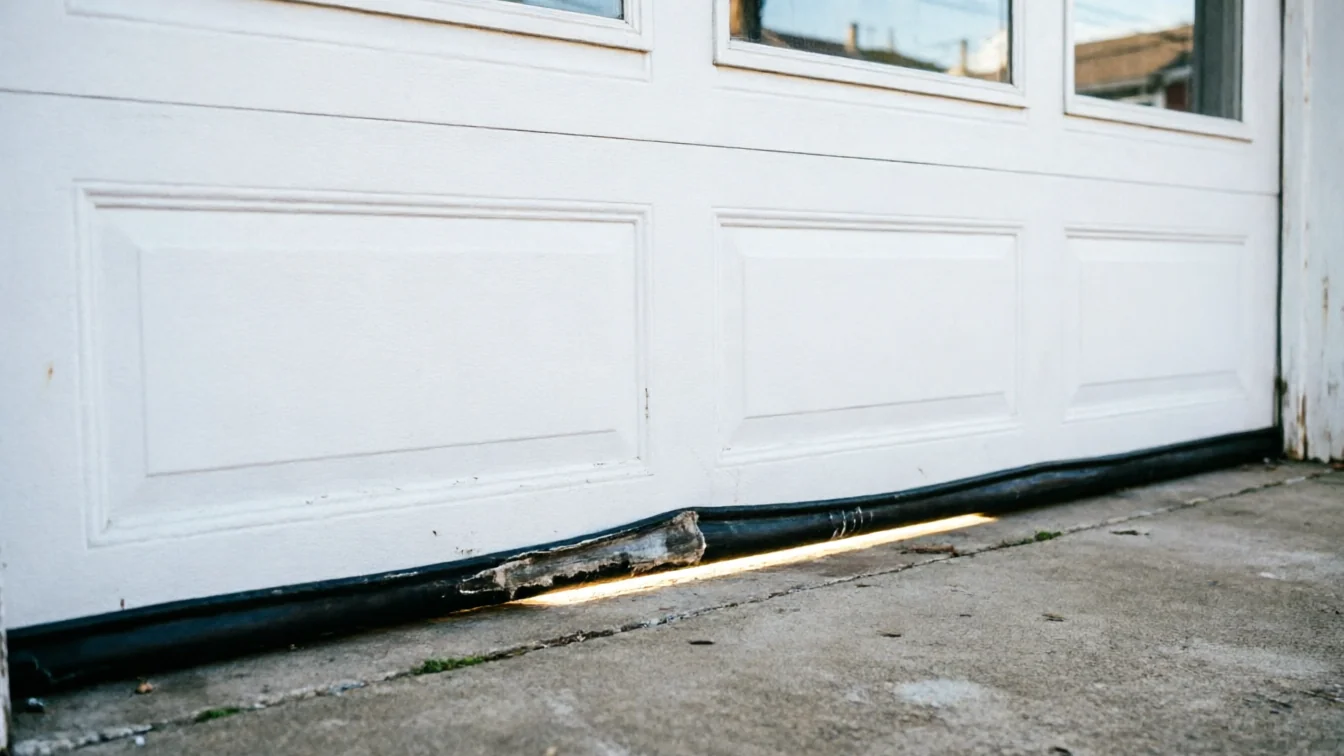
Check the bottom seal in cold weather. If daylight comes through at the corners, that's original construction showing its age - door bottoms from this era were never designed to seal tight against a concrete slab that's also moved slightly over sixty winters. None of this tells you exactly what's wrong, but it tells you whether you're looking at a adjustment or something structural, and that's worth knowing before anyone quotes you a repair.
How we work
Where People Go Wrong
The most common mistake we see in this area is replacing a spring or a panel without checking whether the rest of the system still matches. A door from the 1960s stock that gets one new heavier panel put on, with the old spring left in place, looks fixed for a few weeks and then fails again - the spring was never rated for the new weight.
The second mistake is ignoring the cold-weather binding we mentioned above and assuming it's just "how old doors are." It isn't. A door that only sticks in January is telling you something specific about track alignment or spring tension, not announcing general old age.
Here's the honest limitation: we don't recommend trying to re-tension a torsion spring yourself, on any door, any age. That's not us protecting a job - a spring under load can cause real injury, and it's one of the few repairs where the cost of doing it wrong outweighs the cost of a call. Everything else on this page - checking the track, the seal, how the door moves by hand - is safe to do yourself before you decide whether a call is worth it.
Questions
Common questions
Why does my garage door only stick in winter?
On houses built before modern insulation standards, a single-layer steel door contracts more in cold weather than an insulated one would. That tightens its fit in the track just enough to bind on the coldest mornings, then loosens again as temperatures rise during the day.
Is my old garage door worth insulating instead of replacing?
Depends on the hardware underneath it. If the track and spring are sound and just need adjusting, adding insulation or weatherstripping to the existing door can carry you through more winters. If the spring is already mismatched to the panel weight, insulating won't fix that part.
How do I know if it's the spring or the track?
Disconnect the opener and lift the door by hand. If it feels heavy or uneven the whole way up, that points to the spring. If it only catches or rattles at one specific spot, that's usually the track.
Recommendation
You Might Also Like
More garage door guides for Carlisle homeowners.
Why Your Garage Door Lets the Cold In
Carlisle homes mostly date 1938-1998, median 1962, and the cold here chews through old seals fast.
 What That Noise From Your Garage Door Is Actually Telling You
Carlisle homes built mostly in the 1960s and 70s carry noises tied to that age and our cold winters.
 Is Your Old Carlisle Garage Door Worth Fixing
Carlisle homes mostly date 1938-1998.
Ready when you are
Need a garage door sorted in Carlisle?
Carlisle Garage Door Pros repairs and installs garage doors, springs and openers in Carlisle, PA and the surrounding area.