 Openers and Power Cuts in Carlisle Homes
Carlisle homes built mostly 1938-1998 pair old opener wiring with severe cold winters.
What That Noise From Your Garage Door Is Actually Telling You
Carlisle homes built mostly in the 1960s and 70s carry noises tied to that age and our cold winters. Here's what each sound means and when it's worth a call.
Local detail
What Is Going On
Most of the doors behind these noises match the housing itself - built somewhere between 1938 and 1998, with the median landing at 1962. That matters because a door hung in 1962 doesn't fail the same way as one hung in 2015. Across the 33 named areas that make up this service territory, the stock runs heavy to 1960s and 70s construction, which means a lot of original torsion hardware, original track brackets, and rollers that have outlived two or three owners.
A grinding noise on the way up usually points to a roller that's worn its bearing out, not a spring problem. A loud bang followed by the door going slack is almost always a torsion spring letting go, and on a door this old, the spring has likely never been replaced since the house was built. A rhythmic squeak every few inches is track alignment drifting out over decades of settling. A deep popping sound from the header area is often the torsion bar itself flexing against tired bearing plates. None of these are mysteries once you know the door's age bracket, and in this area, that bracket is almost always mid-century.
The area
What the Weather Here Does to It
Winters here sit in the severe end of the cold band, and that cold is what turns a quiet torsion spring into a grinding one. Steel contracts when it's cold, and a spring wound decades ago doesn't flex the way it did when it was new - cold makes that stiffness worse, so the first hard noise of the season often shows up right after the first real cold snap.
Lubricant is the other half of it. Grease packed into a roller bracket in 1965 or relubricated with whatever was on the shelf at the time thickens hard in deep cold, and a thickened lubricant turns a smooth roll into a dragging scrape. That scrape is louder on steel track than on aluminum, and steel track is what most houses in this stock still have.
Cold also tightens tolerances on hardware that's already a little loose from age. A hinge bolt that's been slightly stripped for years might not rattle in July, but in January, with everything contracted and stiff, that same bolt starts knocking every time the door moves. The noise isn't new - the cold just makes it audible.
What we find
Checking It Yourself
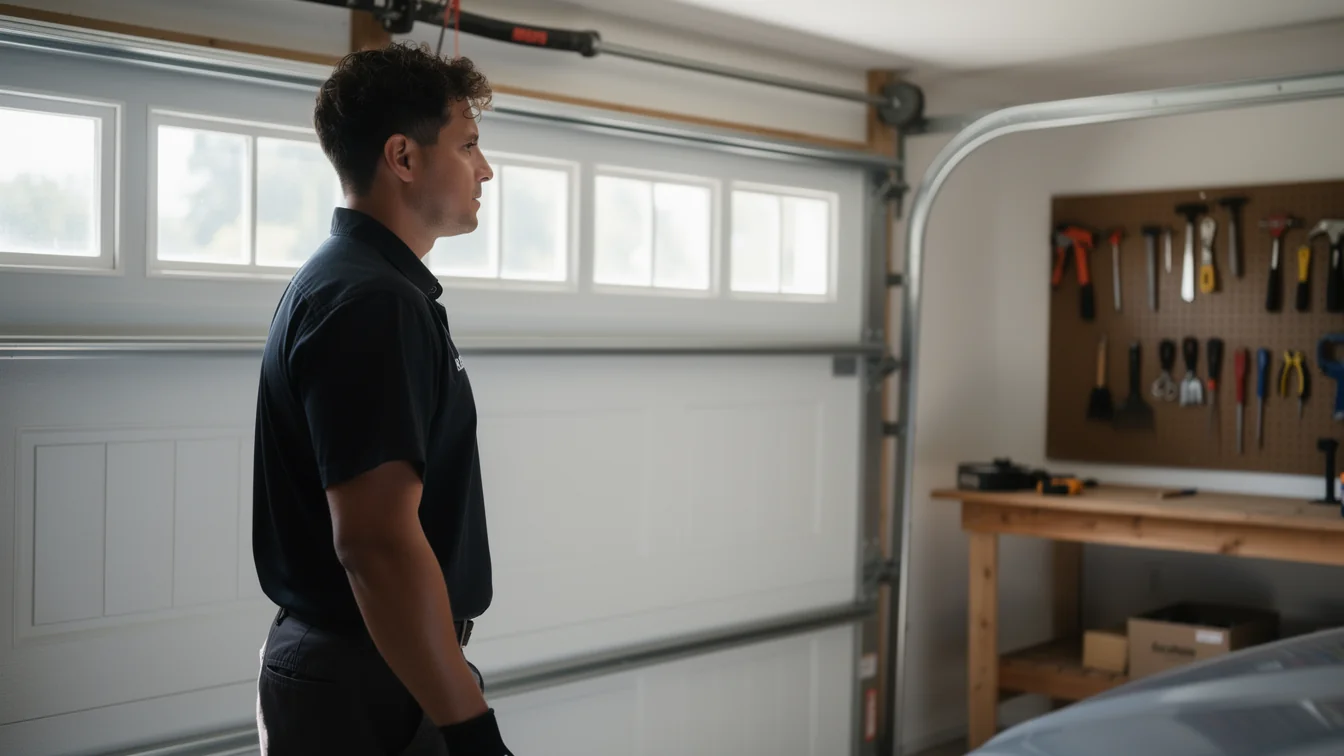
Before anything else, watch the door go up and down once, slowly, and try to place where the sound happens - top of the track, middle, or right at the header where the springs sit. Location tells you more than the sound itself.
Check the rollers first. If you can see daylight through a worn roller wheel or it's cracked, that's your scrape or grind, and it's a part, not an emergency. Check hinge bolts with a wrench - if any turn without resistance, that's your knock.
Do not touch the torsion spring. On a door built in the era most of this area's houses were built, the spring has been under tension for a very long time, and an old spring under tension is not something to loosen or adjust by hand. If the noise is a bang followed by the door refusing to move evenly, stop opening it and call. That one isn't a tightening job.
How we work
Where People Go Wrong
The most common mistake is spraying WD-40 on everything and calling it lubrication. WD-40 is a solvent, not a lubricant - it cuts through old grease and leaves the metal drier than before, which makes the noise worse within a week. A proper garage door lubricant, applied to rollers and hinges, not the track, is what actually quiets things down.
The second mistake is ignoring a single bang because the door still opens. On hardware this old, one spring letting go often means the other one isn't far behind, and running a door on one spring stresses the opener and the track in ways that show up as new noises within a month or two.
The honest limitation here: not every noise is worth fixing with new parts. On a door old enough that the track, rollers, and springs are all original to a 1960s build, patching one component sometimes just moves the noise somewhere else. With a median household income of $76,906 in this area, replacement is a real budget decision, and sometimes the right call is a full door rather than a third repair in two years. We'll tell you which one you're looking at before we start anything.
Questions
Common questions
My garage door bangs once and then won't open evenly. What is that?
That's almost always a broken torsion spring. On a door this old, it's likely original to the house, and once one spring goes, the door loses balance and the opener strains to lift it alone. Stop using the opener and call - running it in that state wears the opener motor and can bend the track.
Why does my door only make noise in winter?
Cold stiffens steel springs and thickens old grease in the rollers, which is why a door that's quiet all summer starts grinding or squeaking once temperatures drop. It's the same hardware, just less forgiving in the cold. A proper winter-rated lubricant on the rollers and hinges usually quiets it back down.
Is a squeaky door a sign I need a whole new one?
Not usually. Squeaks are almost always rollers or hinges, both cheap parts to swap. A full replacement only makes sense when the track is bent, the springs are original and failing, or the door panels themselves are cracked or rusted through - common on houses built before the 1980s.
Can I just keep spraying it until it stops making noise?
Spraying the wrong product, especially a solvent like WD-40, dries out what grease is left and makes the grinding worse, not better. If a proper lubricant on the rollers doesn't quiet it within a day or two, the noise is coming from a worn part, not dry metal, and spraying more won't fix that.
Recommendation
You Might Also Like
More garage door guides for Carlisle homeowners.
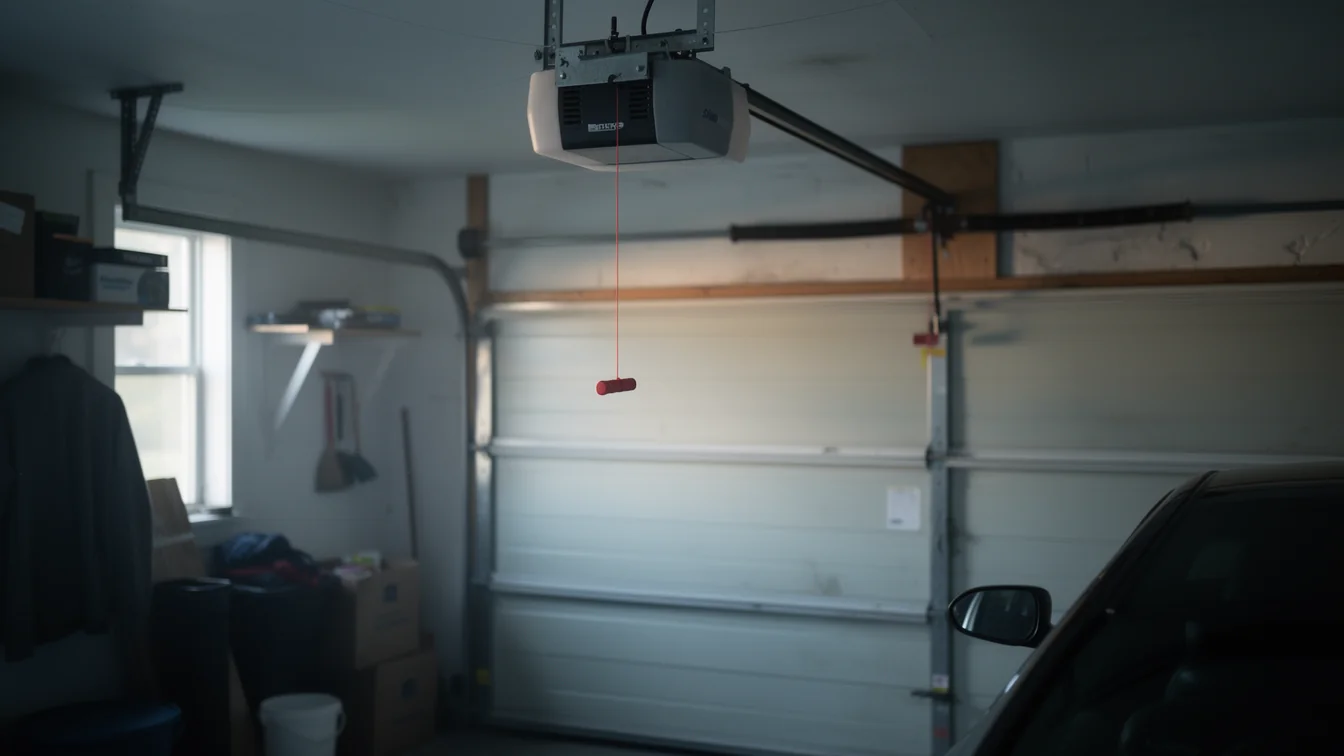
Openers and Power Cuts in Carlisle Homes
Carlisle homes built mostly 1938-1998 pair old opener wiring with severe cold winters.
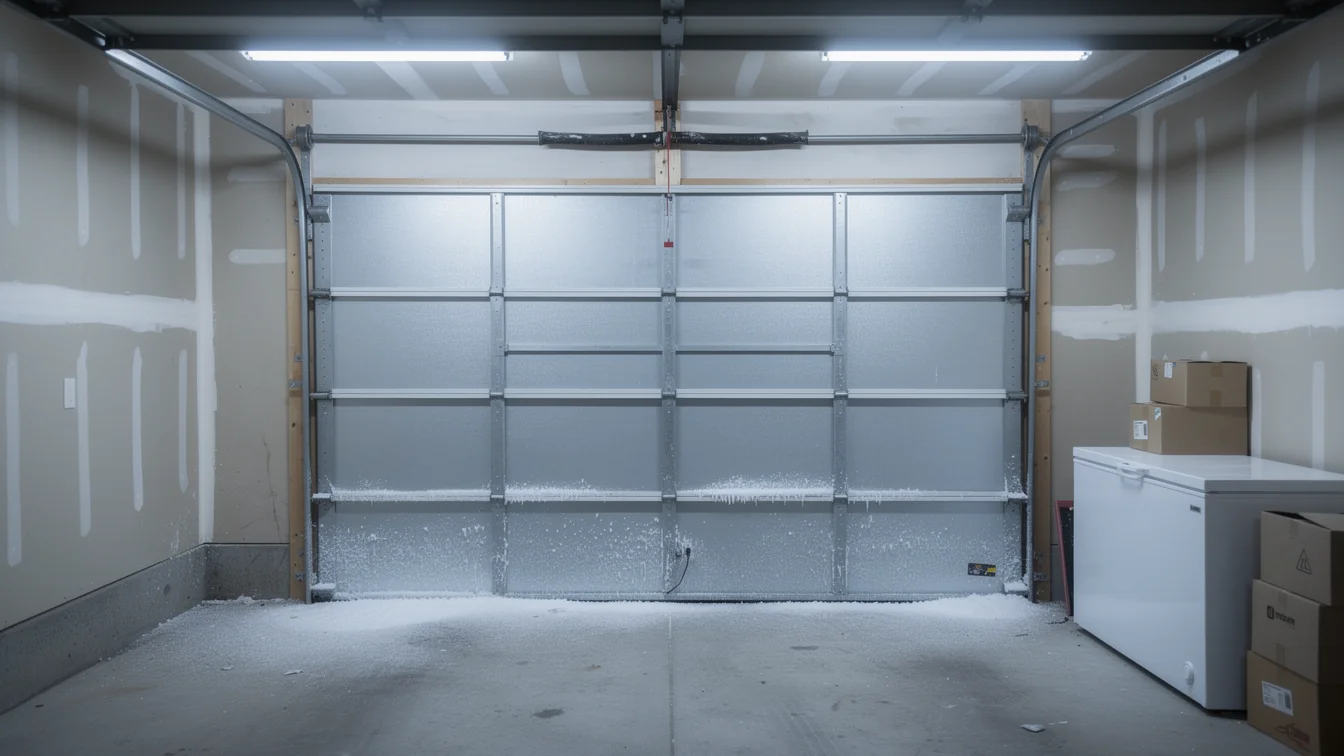 Why Older Carlisle Doors Struggle With the Cold
Carlisle homes mostly date 1938-1998, median 1962, built before modern insulation codes.
 Is Your Old Carlisle Garage Door Worth Fixing
Carlisle homes mostly date 1938-1998.
Ready when you are
Need a garage door sorted in Carlisle?
Carlisle Garage Door Pros repairs and installs garage doors, springs and openers in Carlisle, PA and the surrounding area.