
 Why Garage Door Springs Snap in Carlisle's Cold
Carlisle homes built mostly 1962-era face torsion springs that snap hard in severe cold.
Why a Garage Door Goes Off Track
Carlisle's 1960s-era tracks and cold winters both play a part in off-track doors. Here's what causes it and how to check your own door first.
Local detail
What Is Going On
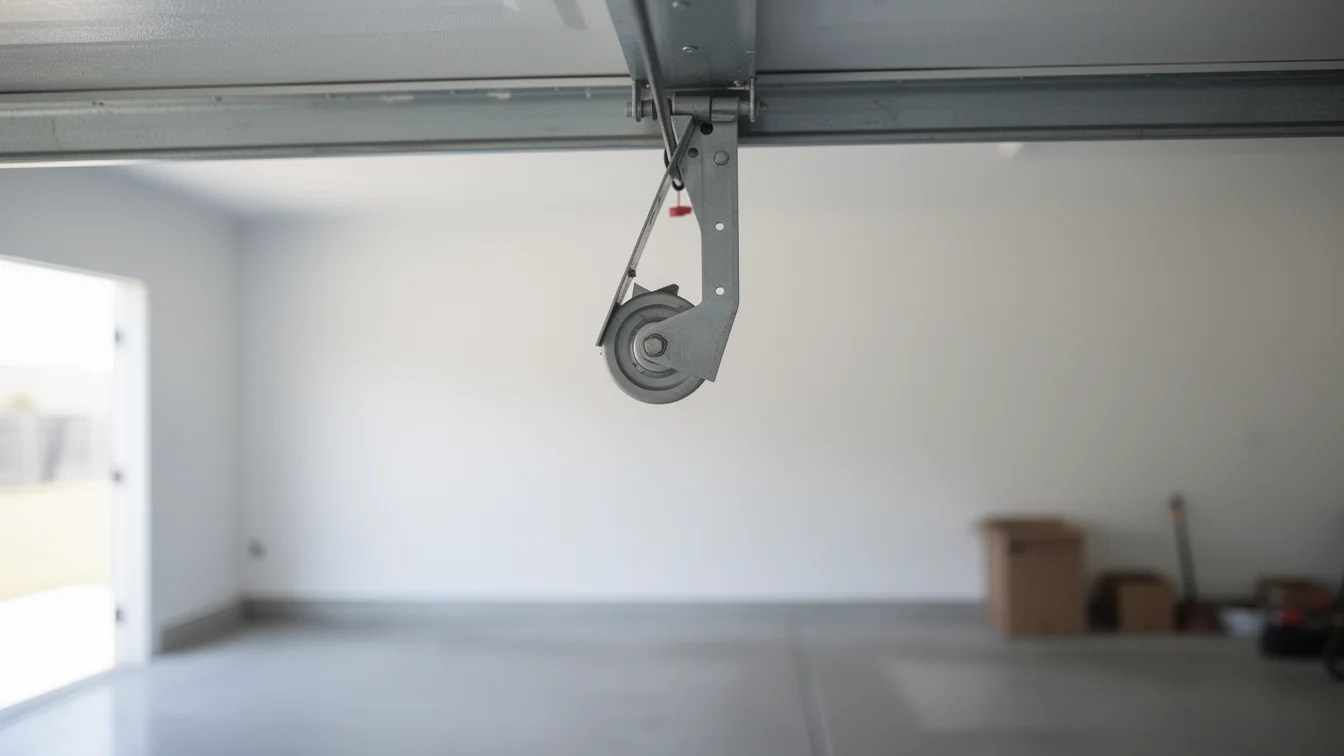
A door comes off track when the rollers leave the metal channel that guides them up and down, usually on one side first. On a lot of the doors we see around Carlisle, the track itself is original to the house - median construction year here is 1962, and a big share of the stock runs from the late 1950s into the 1970s. Track brackets from that era were set with lag screws into jamb wood that's had sixty-plus years to shrink, swell, and loosen its grip. Once a bracket walks even an eighth of an inch out of alignment, the roller starts riding the edge of the channel instead of the center, and every open-close cycle makes it worse. It's not usually one dramatic event. It's a slow drift that ends with a bang, a stuck door, or a roller that jumps the track entirely on a cold morning when the steel has contracted and the clearance is tighter than it was in July. We find bent track more often on garages that were converted or had a second door added later, since that work often reused old hardware instead of resetting it square.
The area
What the Weather Here Does to It
This area sits in a cold climate band with real seasonal swings, and that matters more for tracks than most people expect. Steel track contracts in deep cold, which shrinks the clearance between roller and rail by a small but real amount - enough to turn a slightly bent section from 'rubbing' into 'binding and popping loose.' Panels do the same thing, and on an older door with a track that's already a few degrees out of plumb, the metal-on-metal tightening in cold weather is often what finally forces a roller off the edge rather than just scraping through it. We see more off-track calls in the first hard cold stretch of the year than at any other time, which tracks with houses built decades ago settling into brackets that were never rated for the temperature range Carlisle actually gets.
What we find
Checking It Yourself
Before you call anyone, look at the track from the floor up. Stand at the front of the garage and sight down each vertical rail - you're looking for a kink, a gap between bracket and jamb, or a spot where the rail visibly bows toward the car. Run your hand along the horizontal curve near the top; that's the section that takes the hardest hit when a door slams off-center. Check that every mounting bolt is still snug against the jamb - on houses from the 1960s and 70s that jamb wood has had a long time to move, and a loose bracket is the most common thing we find. If the door still runs but one side sounds different from the other, that's an early warning, not nothing. Don't try to bend track back into shape yourself with a pry bar; track steel is thinner than it looks and it kinks permanently far easier than it straightens.
How we work
Where People Go Wrong
The most common mistake is forcing the opener to keep running a door that's already grinding on one side. The motor doesn't know the difference between resistance from a stuck lock and resistance from a roller riding the lip of a bent rail, so it just keeps pulling until something gives - usually the track, sometimes the panel seam next to it. The second mistake is treating a loose bracket as a one-time fix. If the jamb wood underneath has softened or widened over the decades, the same screw hole will work loose again within a season or two, and that's a repair that needs addressing at the wood, not just the hardware. We'll say plainly that we don't try to rescue track that's kinked in more than one spot - past that point, a repair costs nearly what new track runs, and it won't hold through another cold winter anyway.
Questions
Common questions
Can I just push the door back onto the track myself?
Sometimes, if it's only off by a little and the track isn't bent - you can often guide the roller back in by hand with the door manually lifted partway. But if a bracket is loose or the rail is bowed, forcing it back on just sets up the next failure. Worth a quick look before you try.
Why does this seem to happen more in winter?
Cold steel contracts, and that tightens the clearance between roller and track. On an older door where the track already sits a little out of alignment, that tighter clearance is often what finally forces the roller off the edge rather than just letting it scrape through.
Is a bent track always a full replacement?
Not always - a single soft bend can sometimes be straightened or the section swapped out. Track kinked in more than one place isn't worth chasing; by then the repair cost gets close to new track, and bent metal rarely holds once it's been stressed twice.
Recommendation
You Might Also Like
More garage door guides for Carlisle homeowners.
Why Garage Door Springs Snap in Carlisle's Cold
Carlisle homes built mostly 1962-era face torsion springs that snap hard in severe cold.
 What That Noise From Your Garage Door Is Actually Telling You
Carlisle homes built mostly in the 1960s and 70s carry noises tied to that age and our cold winters.
 Openers and Power Cuts in Carlisle Homes
Carlisle homes built mostly 1938-1998 pair old opener wiring with severe cold winters.
Ready when you are
Need a garage door sorted in Carlisle?
Carlisle Garage Door Pros repairs and installs garage doors, springs and openers in Carlisle, PA and the surrounding area.